


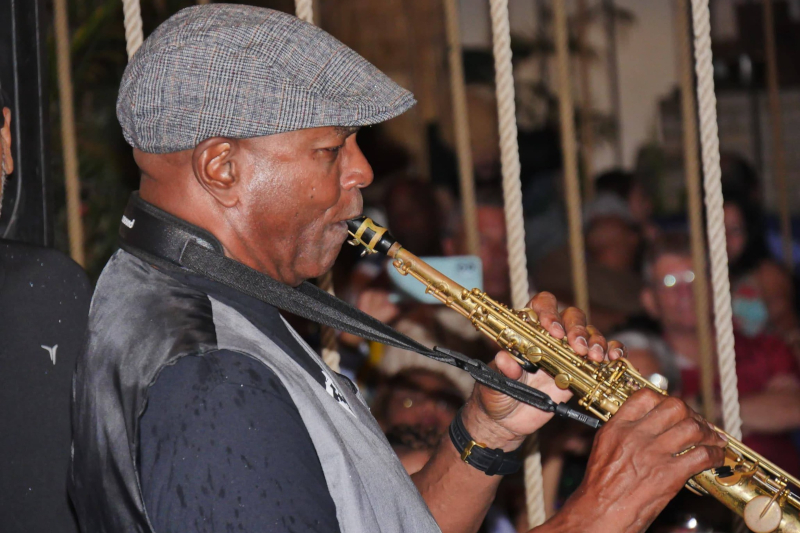
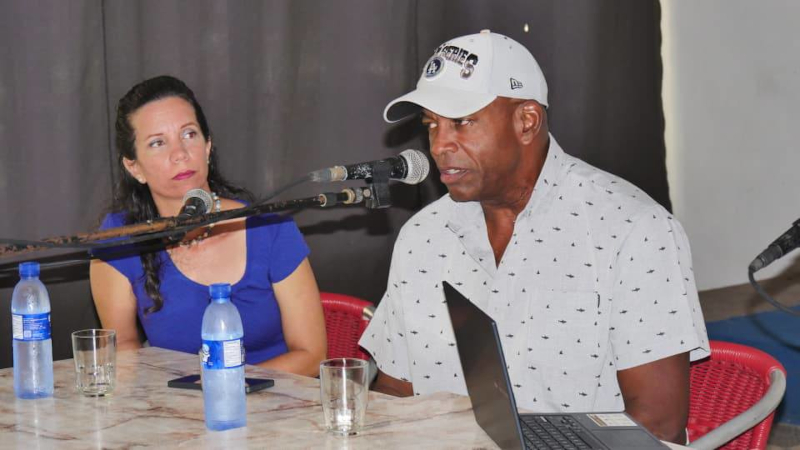
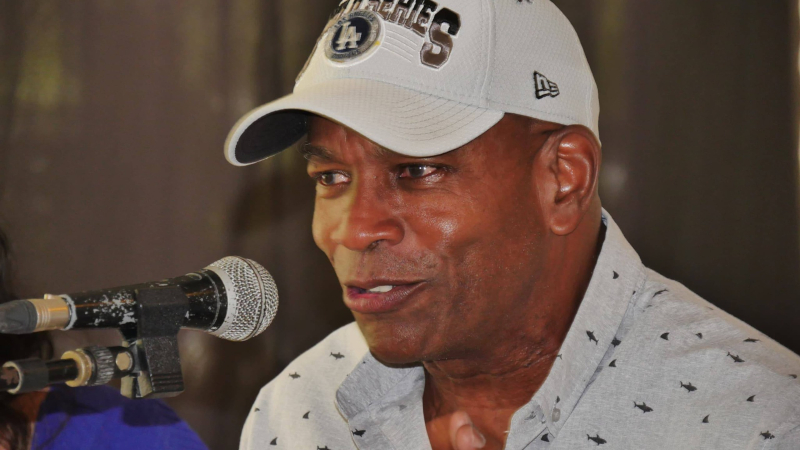
CAMAGÜEY: When Germán Velazco begins telling his story, the conversation quickly stops feeling like an interview and becomes a journey through several decades of Cuban music history. A saxophonist, flutist, arranger, producer, and one of the essential figures of Cuban jazz and popular dance music, Velazco arrived in Camagüey as a guest of the second edition of Jazz Príncipe, where he shared memories, anecdotes, and reflections on a career that has taken him from the classrooms of Cuba’s National School of Arts to legendary ensembles such as Irakere, NG La Banda, and Pablo Milanés’ touring band.
It All Began in Camagüey
Velazco speaks with particular affection about Carmelo Álvarez, one of his earliest teachers.
“He would arrive carrying an umbrella because it rained so much here in Camagüey, wearing one of those bow-tied guayaberas. He was the kind of person who inspired respect,” he recalls.
Music was present in his family, although in a rather unusual way. His uncle owned a dry-cleaning shop and played trumpet. His father was also a musician. His mother, on the other hand, neither played an instrument nor read music. Yet she became a key figure in his musical education.
“My father would play my clarinet exercises for my mother so she could learn them by ear. Then, whenever I made a mistake while practicing, she would immediately say, ‘That’s wrong.’ It was incredible.”
At eleven years old, after competing in a clarinet contest in Havana, he earned a scholarship to attend the National School of Arts (ENA), beginning a formative chapter in his life.
“The ENA was extraordinary,” he says.
There he studied alongside future giants of Cuban music, including Arturo Sandoval, José Luis Cortés “El Tosco,” Jorge Luis Pacheco, Brito, and many others who would later shape the country’s musical landscape.
His years at the school were marked by both learning and mischief.
“I hold a unique record: I was expelled from the ENA twice—and accepted back twice,” he laughs.
He credits much of that second chance to Osvaldo González, regarded as the founder of Cuba’s saxophone school and then head of the wind instruments department.
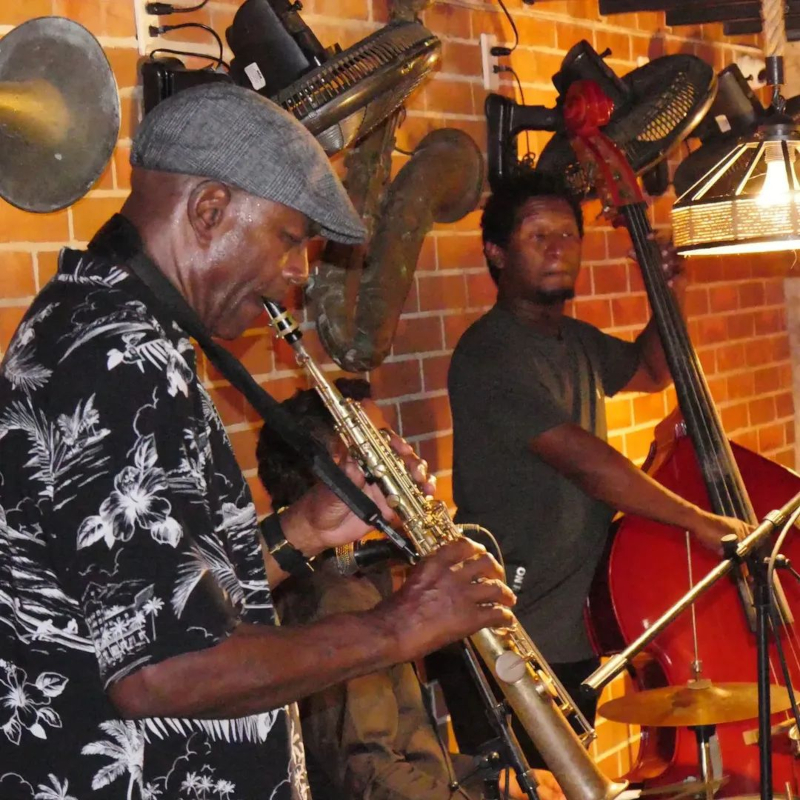
The Band That Changed His Destiny
Before completing his studies, Velazco found another kind of education in the State General Staff Band.
It was there that he began playing flute professionally under the guidance of Alfredo Portela, whom he describes as “a true gentleman,” and where he received one of the most important lessons of his career.
“Arturo Sandoval was the one who taught me how to improvise. I knew absolutely nothing about it before.”
Their relationship remains strong to this day.
“Arturo was my musical father. In fact, he was the one who brought me into Irakere after Paquito left and the position became available.”
Revé and the University of the Streets
Before joining Irakere, Velazco spent three years with the Revé Orchestra, from 1976 to 1979.
That experience introduced him to the world of Cuban dance music from the inside.
“You get to know the streets and the dance music scene. We would spend months on carnival tours. We left in June and came back in September.”
He also learned firsthand the demands placed on a flute player in a charanga orchestra.
“After the singers, the flute is the most important voice. They announce you, and you start playing. Then you keep playing while they barely even look at you. It’s a form of slavery—but it was an extraordinary education.”
He also retains a deeply personal connection to the band: Revé himself became the godfather of his first marriage.
Jazz in Difficult Times
Velazco vividly remembers a little-discussed chapter in Cuban music history, when jazz had very few places to survive and grow. One of those sanctuaries was Johnny’s Dream, a club in Havana.
“Everybody came through there—Chucho, Arturo, Paquito, Pablo Menéndez. It was the place where jazz was played when it was practically forbidden.”
Those late-night jam sessions would shape his future.
“Jazz is what got me into Irakere. Jazz changed everything.”
Irakere: A University of Music
When Velazco speaks about Irakere, emotion is impossible to hide.
“Irakere was a university for every musician who passed through it.”
For him, the ensemble led by Chucho Valdés was much more than a band.
“You didn’t just learn how to play. You learned how to write, arrange, and understand the sound and architecture of an ensemble. You arrived with knowledge, but you became a complete musician there.”
He also remembers the crucial role of Oscar Valdés, whom the musicians affectionately called “the administrator.”
“Chucho handled the music. Oscar made sure everything else functioned.”
Those years brought extensive international tours and the worldwide recognition of one of Latin America’s most influential musical groups.
The Birth of NG La Banda
In 1987, Velazco left Irakere by choice. The reason was simple: the opportunity to create something entirely new alongside José Luis Cortés.
“We wanted to do something different.”
That vision eventually became NG La Banda.
The process was anything but easy. Dozens of institutional meetings were required before the group received official approval and a formal roster. Once established, however, its impact was immediate.
“Between 1988 and 1990, it exploded. The first album was a phenomenon.”
Velazco participated as both musician and arranger during a period that would profoundly reshape Cuban dance music.
Yet he remains critical of the term “timba.”
“I’ve never agreed with calling it a musical genre. Timba is a popular expression. What NG, Los Van Van, Isaac Delgado, and Adalberto Álvarez were doing wasn’t the same thing. Putting it all into one category oversimplifies the reality.”
Pablo Milanés: The Finest Years
If there is one chapter Velazco considers especially meaningful, it is the twenty-five years he spent with Pablo Milanés.
“It was the best period of my life as a musician.”
For a quarter century he toured with the celebrated singer-songwriter.
“We practically lived in Europe. We rehearsed in January and then spent the rest of the year on the road.”
Beyond Milanés’ artistic stature, Velazco emphasizes his generosity.
“Pablo helped countless people. He bought instruments, supported recording projects, donated equipment to cultural institutions and hospitals. Many times he did it with his own money.”
He also praises musical director Miguel Núñez, whom he considers a genius for continually reinventing arrangements of songs beloved by generations of Cubans.
Producer by Necessity and by Calling
Over the years, Velazco has developed an extensive career as a producer.
He has worked on recordings by artists and groups as diverse as the Maravilla de Florida Orchestra, Vania Borges, and Anaís Abreu.
Yet he acknowledges that in Cuba, production work is often shaped as much by economic realities as by artistic preferences.
“Here, you produce whatever comes your way. That’s the reality.”
Even so, he admits a particular fondness for songwriting projects and recordings that allow for broader artistic exploration.
The Future Passes Through Camagüey
The conversation ultimately returns to where it began: Camagüey.
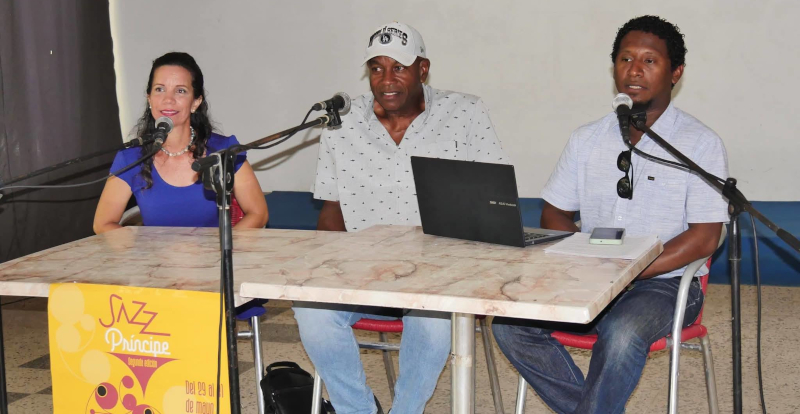
Velazco believes the city possesses one of the richest cultural traditions in Cuba and is optimistic about the future of the Jazz Príncipe Festival.
“The best thing about this festival is that it’s going to continue.”
He is convinced it will attract more musicians and larger audiences with every edition.
“There’s talent here. There’s a high level of musicianship. More artists will want to come.”
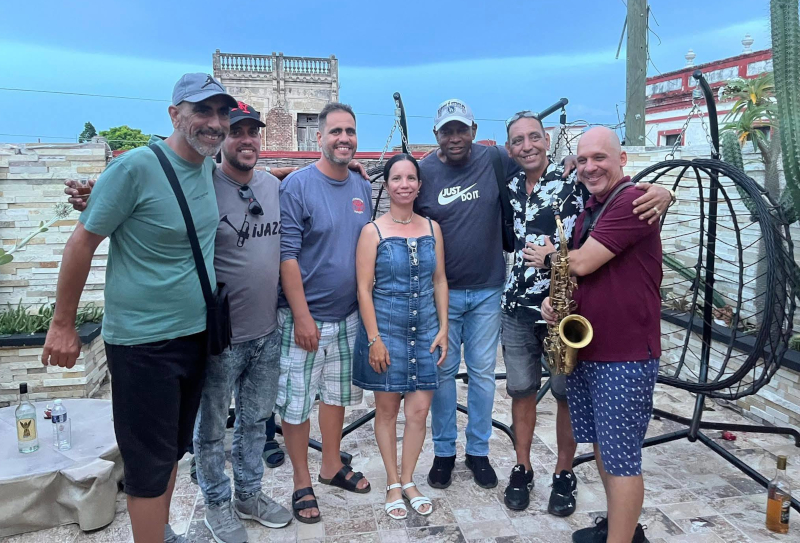
He even revealed plans that could bring him back to the city before the end of the year. Discussions are underway to strengthen Camagüey’s role within Cuba’s jazz circuit, and Velazco hopes to return with one of his latest projects, the Cuban Sax Quintet.
“I should be back by the end of the year because there are plans to establish Camagüey as a major jazz festival hub. Víctor Rodríguez wants me to take the lead on that. I’d love to bring my quintet here. We have a project with a chamber orchestra that I’d like to premiere in Camagüey. A first half with the orchestra and a second half with just the quintet would be beautiful.”
For Velazco, the future of Jazz Príncipe depends on bringing together generations and creating opportunities for emerging artists from across the country.
“There are incredibly talented young musicians in Santiago de Cuba, Santa Clara, and Havana. We need to bring them here.”
“This festival cannot disappear. It’s the festival of the region.”
Coming from someone who has witnessed—and helped shape—much of the recent history of Cuban music, those words carry particular weight. Listening to him, it is hard not to believe.
Translated by Linet Acuña Quilez