
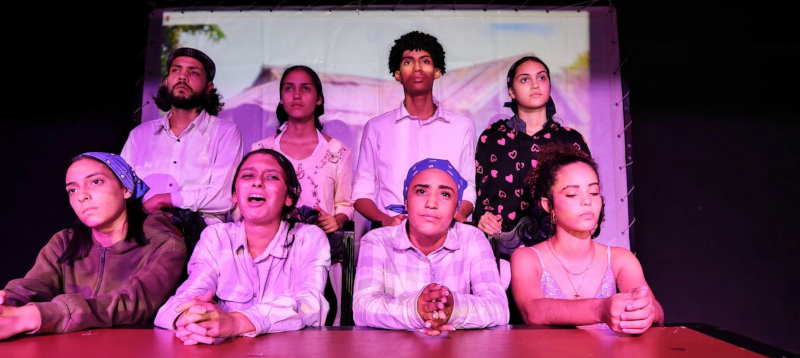
CAMAGÜEY. — The lobby of the Tasende was filled with students, families, and teachers from the Vicentina de la Torre Academy of Arts. There were greetings, reunions, and the joy of being together. Then I went up to the small theater at Teatro del Viento, cool from the air conditioning and scented with incense. It had been so long since I had last been there that I could not even remember when I had last visited another theater in the city. I was simply grateful to be an audience member again.
Eight actors shared the stage in La casa vieja (The Old House), by Abelardo Estorino, an academic exercise based on a complex play woven from silences, glances, and family wounds. The composition of the cast also reflected the circumstances of their training. Alongside the third-year students were second-year students, some of whom had been unable to complete their assessments in their home communities because there were no theater spaces where they could do so.
Leonardo Leyva explained part of the teaching process: first, theater without words; then, the relationship with another person, still without dramatic intensity; and finally, characterization. Before stepping into Estorino's characters, the students had gone through the exercise known as the masquerade: reading, imagining a house, choosing a character, and beginning to inhabit it. The stage as a space for learning, not a formula to be followed.
After the performance, Freddys Núñez Estenoz, director of Teatro del Viento, invited the audience to share their thoughts. There was praise for the acting and for the enduring relevance of themes such as machismo. But one person also admitted to having grown bored at times, given the play's slow pace and the uneven effectiveness of some of the actors' glances. Freddys defended introspection, the inward turns of the human experience, and the possibility of a theater that does not always have to be as rowdy and irreverent as María Antonia. A play can be contemporary and still remain trapped in an old mold. There are lessons to be learned from that tension, too.
I was less concerned with judging the exercise than with enjoying the opportunity to return to the theater. That is why I praised the Acting department, established by Leonardo and now headed by Freddys, and asked that the festival that once brought student productions to the Tasende stage be revived. Its level of professionalism made us happy.
The theater listings are missed. So is the ritual of the darkened auditorium, the city gathering around a story. Clown performances in parks and squares have their place, but they cannot replace the encounter with theater groups or the experience of sitting down to watch a play.
And we are grateful that, even in a school year that begins without all the normal conditions one might hope for, there are people determined to keep training actors. May material hardships, food shortages, and the conditions of student housing not interrupt that commitment. To sustain a school is to sustain a possibility: that these young people can study, rehearse, make mistakes, and find their place on a stage.
I was left with Esteban's conviction: believing in what is alive and changing.
I want to believe in a theater that insists on opening its doors, in a school that does not give up on its students, and in a city that can once again come together with its actors. Because no one learns to act in the abstract. And theater cannot remain alive without people to make it, or people willing to come and see it.
Translated by Linet Acuña Quilez