
CAMAGÜEY.— I went digging through my papers for memories of La Vocacional. I don’t know exactly what I expected to find. Perhaps a photograph, a date that might help me put the years in order, proof that it really happened and wasn’t one of those lives that grow more beautiful with time because memory has chosen to hold on to the best parts.
I found papers.
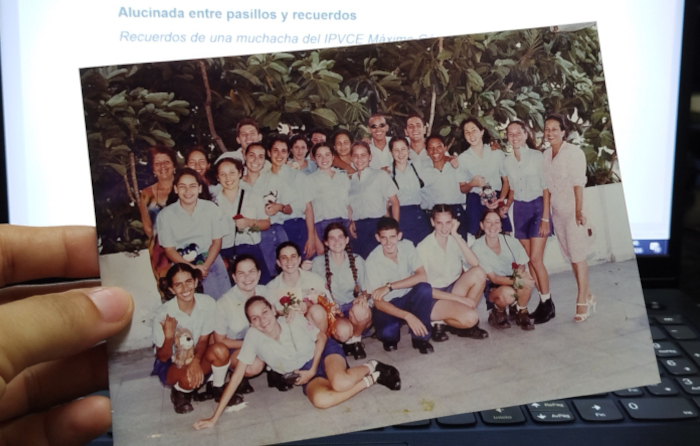
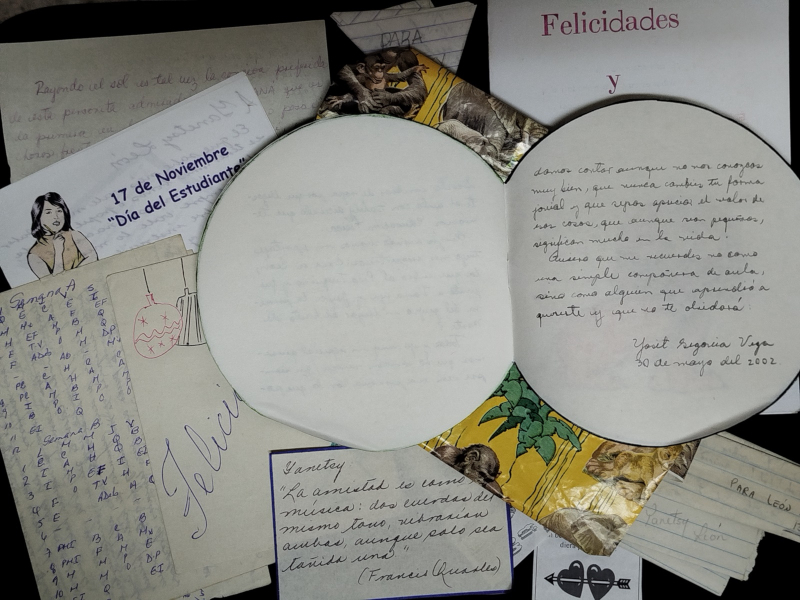
A photo of our senior class. A timetable. Little notes. Postcards printed on those old printers, with tiny hearts pierced by arrows. A love letter. An apology from a classmate. A little note from Yaimé, La Flaca, with her phone number and address, and beneath the date a phrase that now seems enormous to me: “Year of Farewells.”
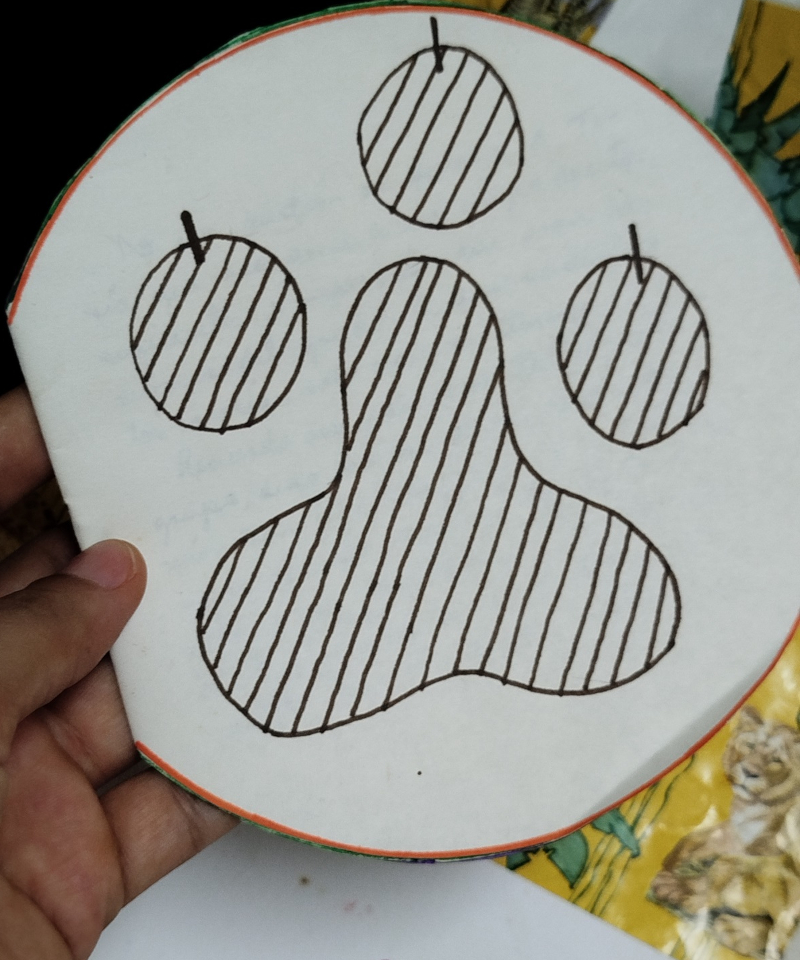
And I found a small, round notebook. On the cover was a lion’s paw print. The pages had edges in different colors, and there was a drawing of a lion at the back. Inside was the farewell profile Yasit Segovia Vega wrote for me on May 30th, 2002.
Twenty-four years later, I read it again.
And suddenly, a girl I thought I knew appears before me.
I studied at the Máximo Gómez Báez Pre-University Institute of Exact Sciences from 1999 to 2002.
La Vocacional, as everyone called it.
It was the kind of school you got into with good grades, good entrance-exam results, and, in my case, by following a cousin. I wanted to study there because she did. She was my role model, and I followed her.
I lived in Camagüey, but the school stood along the ring road, next to the Tínima brewery. Being a boarding student meant learning other things, too.
When there was no water, we carried buckets and containers from a standpipe at the brewery. Or we headed toward the urban farm, where we did agricultural work, usually weeding garden beds.
During Civil Defense drills, we practiced what to do in the event of an ammonia leak. It wasn’t an entirely imaginary threat: those leaks happened fairly often. Among other things, we learned to check the direction of the wind so we would know which way to run.
Some memories have a smell. Others have a soundtrack.
The memories of La Vocacional sometimes sound like a bus, the murmur of the dining hall, a Maná song, someone calling from another dorm.

And they have hallways.
I remember one afternoon when we were sitting on one of the staircases between the dorm and the dining hall. We were talking about university majors because the aptitude tests were coming up.
Everyone else seemed to know.
I didn’t.
I wrote down possible ways out of school as if I were listing possible destinations: ISA, Law, Journalism, Psychology.
The only thing I knew for sure was that I wanted to attend a university somewhere other than Camagüey. At the time, I thought the university there was ugly, too much like a rough provincial high school. I wanted different architecture, another city, another life.
A girl who shared my name looked at me and, faced with my complete lack of direction, said:
“You should study Journalism.”
That was how Journalism entered my life.
 Later, I took the aptitude test, passed it, and earned one of the few available spots based on my ranking. There were three of us that year, but my classmates had to complete their military service, so I ended up leaving for Santa Clara alone.
I became the Camagüey girl in the first Journalism graduating class at the Central University of Las Villas.
But that is another story.
At La Vocacional, I was good at History, Spanish Language, and Math. I was never on a national academic team or anything like that. There were, however, a few budding geniuses in my classroom.
I belonged to Unit 1, in the first group.
I also climbed Pico Turquino.
There were three of us at the front of our group: Damairys, from Sibanicú; Joyce, from Camagüey; and me.
My mother had packed fried pork and other things for me to eat during the climb. But as we went up, we discovered that the real source of energy was the bottle of water sweetened with brown sugar that Joyce was carrying.
And then there was something else that could only have happened back then: because Joyce was the only boy among us, he ended up carrying all three backpacks.
We weren’t the first of everyone. We were the first in our group.
Sometimes memory needs that distinction.
There are other things.
The dorm. What we ate. The teachers. First loves. Long passes and short passes. Nights of supervised study.
One of those nights, we learned about the Twin Towers by watching television in the classroom.
We were teenagers when the world changed before our eyes on a screen.
We also learned how to live together.
Our classrooms brought together students from every municipality in the province. Some came from families with more means, others from families with very little. People arrived with different stories and ended up sharing, for three years, a table, a dorm room, a staircase, the anxiety before an exam, a song.
Perhaps that was also La Vocacional: a school that taught subjects, but that, without intending to, also taught us how to put up with one another, how to care for one another, how to discover that someone could be different and still be one of us.
I signed my name with four little circles, like a lion’s paw print.
I would stand in front of the classroom and recite Fayad Jamís.
We sang Rayando el Sol.
We danced casino in the flag square.
There was a discipline officer named José Pérez, feared by all of us and, looking back, perhaps necessary too.
And there was Yasit.
He had not started with us. He arrived later, when his group was disbanded.
He was assigned to write my farewell profile.
The tradition was simple and beautiful: each person was given the name of a classmate and had to write about them. If you didn’t know that person well enough, you had to find a way to get to know them.
That was how some of those little notes I still keep came to be.
Yasit began his by admitting that he didn’t know me. He had only heard things about me.
Then he wrote that the girls from Camagüey seemed to him like “Snow White’s little girls,” so refined and delicate, as though we slept inside a glass box.
I laugh now.
Because I know that those girls in the glass box also carried water when there was none, weeded garden beds, climbed mountains, and ran when there was an ammonia leak.
But what moves me most is not what Yasit thought at first.
It is what he discovered later.
“You always tried to stand out,” he wrote.
I would stand in front of everyone and say whatever silly thing came into my head, and somehow get them to pay attention to me as though I were the center of the universe.
Up to that point, I recognize myself.
But then came the poem.
Yasit remembered that crazy girl who recited Fayad Jamís and, through his verses, began to see me differently.
Behind the noisy girl was someone willing to help.
Someone capable of putting aside her own studies for the sake of others.
Someone people could count on.
He even remembered one of my “stunts”: the time I showed up in the classroom with Zahily, announced that we had P.E., and somehow convinced everyone to change clothes.
I had forgotten some of those things.
She hadn’t.
And that is the strange thing about growing up: little pieces of ourselves disappear from our own memory even as they remain completely intact in someone else’s.
I have an apology note from a classmate.
He wished me a good future and asked me to keep being myself.
I have Yaimé’s words. She knew that someday, when someone gave me flowers or I ate a little plantain, I would remember her.
I have the postcards our teachers made for Students’ Day. One was handmade and signed by Julio, Graciela, and María del Carmen.
I have another one featuring Dibu, probably prepared with the help of Raudel, our computer teacher.
I have a March 8th postcard with little paragraphs written by my classmates.
I have letters from a time when, to say “find me if you need me,” you had to write it down on a piece of paper and hand it to someone.
Now, when I think about those pieces of paper, it seems to me that they all said the same thing.
Don’t get lost.
Don’t change.
Find me.
I’m here.
I no longer know where many of those classmates are.
I don’t know what became of their dreams.
I don’t know how many became what they wanted to be that afternoon on the staircase, when we were talking about university majors.
Some names remain intact. Others suddenly appear in a photograph, and I have to search for them somewhere inside myself.
But the girl I was back then does appear.
She is in the little round notebook.
She is in the four circles that imitated a lion’s paw print.
She is in a girl from Altagracia who, without knowing her very well, had to look closely at her in order to write about her.
And above all, she is in those final words from Yasit: that I should never change, that I should remain someone others could count on, someone who knew how to appreciate the value of small things.
Twenty-four years later, I don’t know whether I have completely lived up to that.
I have moved from city to city. I have learned from different jobs. I have made new friends. I have absorbed things that teenager could never have imagined. I have lost people. I have gained others. I have taken paths that back then were not even on the list we were making on that staircase.
But I still have the notebook.
And when I read it, I understand something again that perhaps I didn’t know then: a life is also built from the memories we leave in other people.
That is why I think of all of them.
Those I still come across. Those whose whereabouts I no longer know. Those who surely changed a great deal, and those who may still be, somewhere inside themselves, those uniformed teenagers.
To all of them, I wish what that girl from 2002 would have wanted to hear: that they achieve their goals. That they fulfill their dreams.
And if they ever find themselves lost among streets, hallways, and memories, I hope they find within themselves a small paw print reminding them who they once were.
As for me, I’m still wandering around there.
Dazed.
Among hallways and memories.
Translated by Linet Acuña Quilez