
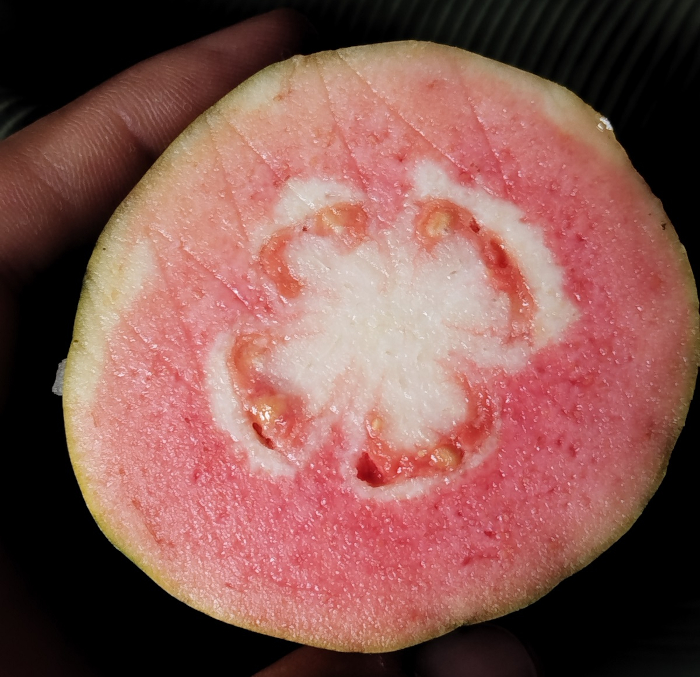
CAMAGÜEY.— There was a time when world powers waited for Cuba to fall like ripe fruit. By June 2026, the fruit was no longer an apple, nor a geopolitical metaphor. It was a half-eaten guava, pecked away by a cheeky parakeet who watched from her cage as humans kept inventing new ways to make it through another day.
I bought the guava of discord from a street vendor.
“Pink flesh,” he promised.
When I cut it open, a beautiful white flower appeared at its center—perfect and unexpected. Before we could debate its meaning, Coti had already eaten half of it.
Coti is the house parakeet. Every day she seems to know more than she should. From her privileged perch, she watches us discuss the news, blackouts, rumors, and plans. She tilts her head when we talk, and sometimes she looks as though she’s listening with a patience none of us seem to possess anymore.
The surviving half of the guava sat on the table. It looked like an island. Or a compass. Or a flower determined to bloom in the middle of a drought.
Meanwhile, life carried on with its usual stubbornness.
My daughter is about to graduate from sixth grade. There is no school now. There is only a date approaching on the calendar and the certainty that one chapter is ending.
We listen to music—a playlist shared across generations, where Michael Jackson and Milo J coexist with Fito Páez and K-pop, alongside that Grupo Frontera cumbia, “Coqueta,” which suddenly appears and then lingers in your head for days.
Maybe the future will look something like that playlist.
Every morning, I have coffee with my parents. Coffee roasted and ground according to proportions that would be impossible to explain to purists and perfectly understandable to anyone living through these times. My father found the beans. Charcoal dust did the rest.
The result is less a beverage than a conversation.
The coffee tastes of memories. Of stories told again and again. Of absent relatives. Of plans we still don’t know whether we’ll ever be able to carry out.
Then there are the cats.
Officially, we take care of them. We find them shade, fresh water, and comfortable places to sleep. But I increasingly suspect that they are the ones looking after us. They settle nearby when anxiety tightens its grip. They appear silently when the house becomes too quiet. They remind us that there is a way of living that does not depend on headlines or statistics.
I try to write.
I collect ideas for future posts—stories, observations, fragments of conversations. I do it so I won’t disappear from social media, even though the internet connection has become a capricious creature. Publishing something feels more and more like throwing a message in a bottle into the sea.
Sometimes it arrives.
Sometimes it doesn’t.
But the bottle exists.
And that already means something.
My mother tends an oregano plant. She watches it grow with the kind of attention some people reserve for affairs of state. She waters it, protects it, and then incorporates it into the day’s meal. The plant moves quietly from the patio to the plate, becoming aroma and flavor.
There is a lesson in that.
Survival rarely takes the heroic shape imagined in books.
That is why the anxiety of these days can be so deceptive. It wants to convince us that shortages are all there is. It wants us to forget everything else.
But life persists.
It persists in a playlist.
It persists in a conversation.
It persists in the half of a guava displaying its white flower on the table.
No—the other half was eaten by Coti while we charted our daily route toward nightfall.
Translated by Linet Acuña Quilez